Computer Engineering Technology
Our Computer Engineering Technology program provides students with hands-on experience in computer hardware, programming, operating systems, networking, and information security. Students progressively develop their technical knowledge and practical skills from Grade 10 through Grade 12 while working with real computer hardware and industry-relevant technologies.
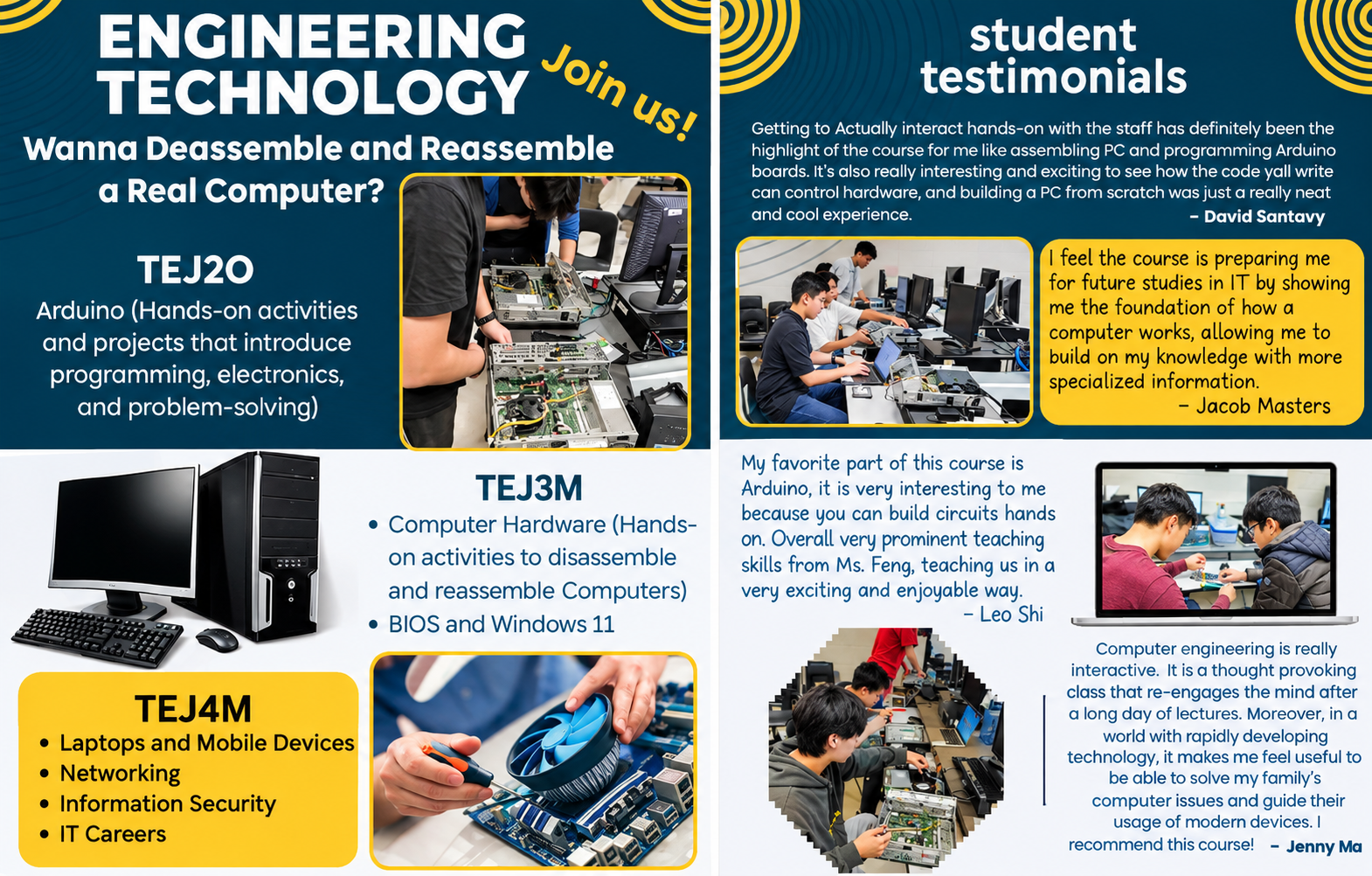
TEJ2O — Grade 10 Computer Technology
Focus: Arduino, Electronics & Programming
TEJ2O introduces students to the fundamentals of computer engineering technology through Arduino-based projects, electronics, and programming. Students learn how computer systems interact with electronic components and develop practical programming skills by designing and building circuits.
Students work with components such as LEDs, buttons, sensors, motors, servos, and other electronic devices. They learn to write and test Arduino programs while developing problem-solving, troubleshooting, and hands-on technical skills.
TEJ3M — Grade 11 Computer Engineering Technology
Focus: Computer Hardware & Windows Operating Systems
TEJ3M focuses on understanding the hardware and operation of desktop computer systems. Students learn about computer components including motherboards, CPUs, GPUs, memory, storage devices, power supplies, cooling systems, ports, and expansion cards.
Students gain practical experience by disassembling and reassembling desktop computers, identifying and installing computer components, and understanding hardware compatibility. Students also learn how to install Windows, configure Windows settings, and manage basic operating-system configurations.
Through hands-on activities, students develop practical skills in computer assembly, hardware identification, operating-system installation, configuration, and troubleshooting.
TEJ4M — Grade 12 Computer Engineering Technology
Focus: Networking, Information Security, IT Careers & Linux
TEJ4M builds on students' previous hardware and operating-system knowledge and introduces more advanced areas of computer technology. Students learn about computer networks, information security, and careers in the information technology industry.
Students explore how computers communicate across networks and examine important concepts related to protecting computer systems and information. They also gain practical experience with virtual machines and Linux operating systems, learning how virtualized environments can be used to install and work with different operating systems.
TEJ4M helps students develop the technical knowledge and practical skills needed to explore further education and careers in areas such as networking, cybersecurity, systems administration, technical support, and other IT-related fields.
A Progressive Learning Path
The three courses provide a progressive pathway through computer engineering technology:
Grade 10 — TEJ2O
Arduino → Electronics → Programming → Hands-on Projects
↓
Grade 11 — TEJ3M
Computer Components → Desktop Assembly → Windows Installation → Windows Configuration
↓
Grade 12 — TEJ4M
Networking → Information Security → IT Careers → Virtual Machines → Linux
Students therefore move from building and programming electronic systems, to understanding and configuring computer systems, and finally to working with networks, security, virtualization, and Linux.